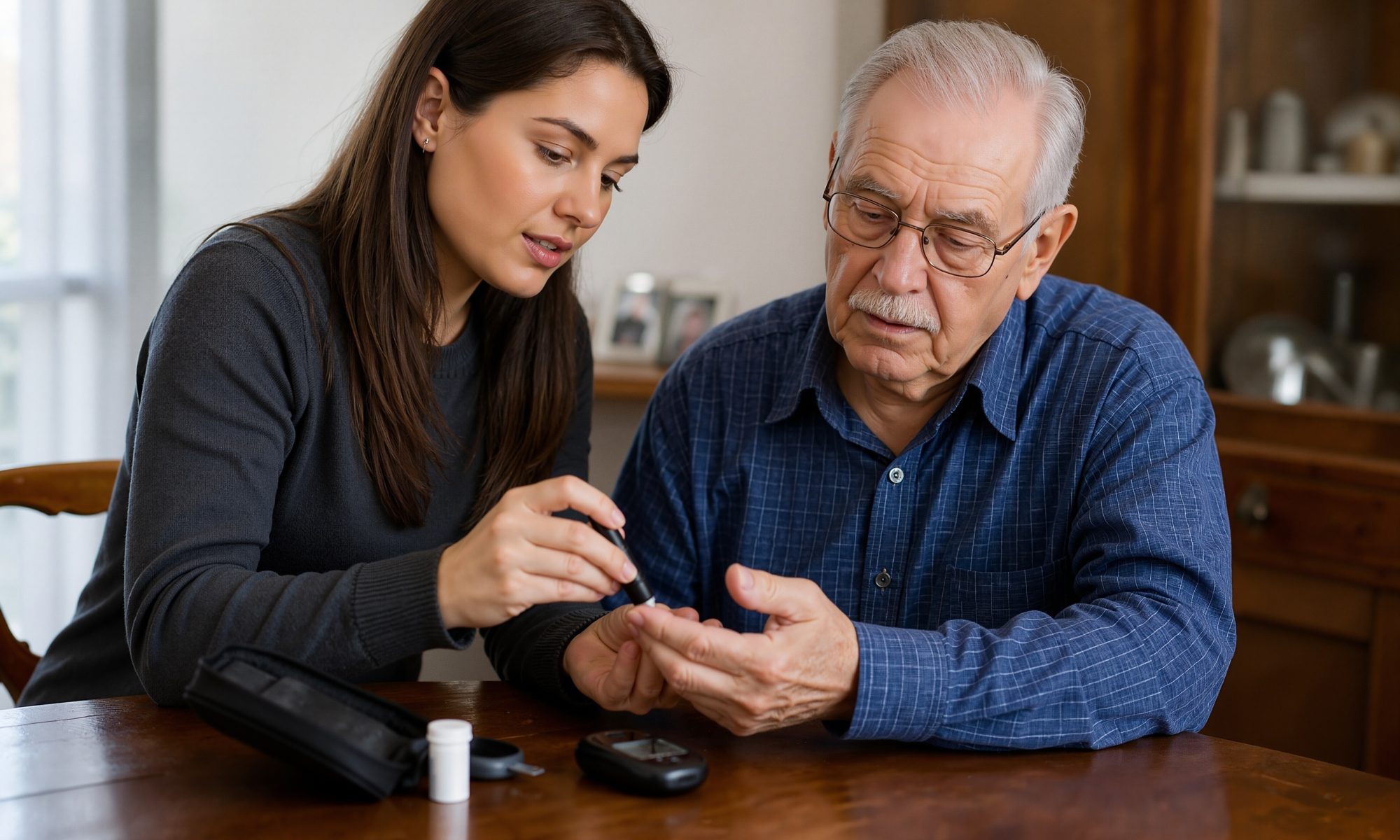
Managing diabetes through in-home care involves consistent blood sugar monitoring, a balanced meal plan tailored to individual needs, regular physical activity, and early detection of complications like nerve damage or vision changes. In-home caregivers create routines that keep blood sugar levels stable, reducing the risk of hospitalization and improving quality of life.
Diabetes management doesn’t stop at doctor visits. It happens every day, in the kitchen, during meals, and through daily routines at home. Consistent care at home plays a central role in keeping blood sugar levels stable and preventing complications. This guide breaks down the key components of in-home diabetes care, from diet planning to monitoring and prevention strategies.
What Diet Changes Help Seniors Manage Diabetes at Home?
Diet is one of the most powerful tools for controlling blood sugar levels. A well-planned consistent eating schedule can prevent spikes and crashes throughout the day.
Effective dietary strategies include:
- Prioritizing fiber-rich foods – Vegetables, whole grains, and legumes slow down sugar absorption.
- Limiting refined carbohydrates and added sugars – These cause rapid blood sugar spikes.
- Balancing meals with protein and healthy fats – This helps seniors maintain steady energy levels between meals.
- Practicing portion control – Consistent meal sizes prevent unpredictable blood sugar swings.
- Maintaining regular meal timing – Eating at similar times each day supports more predictable glucose patterns.
Meal planning at home works best when it’s simple and repeatable. Caregivers or family members can help by preparing meals in advance and keeping a visible schedule.
Living with serious health conditions can make it challenging for seniors to age in place. However, they can maintain a higher quality of life with the help of professional Montgomery 24-hour home care. Seniors can benefit from assistance with meal prep, bathing, transportation to the doctor’s office, medication reminders, and much more.
How Often Should Blood Sugar Be Monitored at Home?
Monitoring frequency depends on your loved one’s diabetes type, treatment plan, and overall health status. For many people with type 2 diabetes managed through diet and oral medication, checking blood sugar once or twice daily may be sufficient. Those on insulin therapy often need to test more frequently (sometimes four or more times per day).
Common monitoring routines include checking blood sugar:
- Upon waking, before eating
- Before and after meals
- Before physical activity
- Before bedtime
Keeping a log of these readings helps caregivers identify patterns over time, making it easier to spot what foods, activities, or routines affect blood sugar levels the most.
What Are the Warning Signs of Diabetes Complications?
Recognizing early warning signs at home can prevent minor issues from becoming serious health events. Diabetes can affect multiple body systems, so it’s important to watch for a range of symptoms.
Warning signs to monitor include:
- Numbness or tingling in the hands or feet, which may indicate nerve damage
- Blurred vision or sudden changes in eyesight
- Slow-healing cuts or sores, particularly on the feet
- Unexplained fatigue or persistent thirst
- Swelling in the legs or ankles
Daily foot checks are especially important, as reduced sensation can mask injuries that might otherwise go unnoticed.
How Can Physical Activity Be Incorporated into Daily Routines?
Regular movement helps the body use insulin more efficiently, which supports better blood sugar control. Physical activity doesn’t need to be intense to be effective. Consistency matters more than intensity.
Simple ways to build activity into a daily routine include:
- Taking short walks after meals to manage post-meal blood sugar spikes
- Incorporating light stretching or chair exercises for those with mobility limitations
- Setting a consistent time each day for movement to build a sustainable habit
- Tracking activity alongside blood sugar readings to observe patterns
Even 10 to 15 minutes of walking after a meal can make a measurable difference in blood sugar response.
Even seniors who have mobility issues or health challenges can still get the benefits of exercise, especially with the help of trained professional caregivers. Montgomery homecare services professionals can be a wonderful boon to seniors. Whether they require around-the-clock supervision or just need assistance with exercise and household tasks a few days a week, seniors can enjoy a higher quality of life with the help of trusted in-home caregivers.
How Does Consistent Routine Support Long-Term Diabetes Management?
Predictability is a powerful ally in diabetes care. When meals, medication, monitoring, and activity happen at consistent times each day, blood sugar levels become easier to anticipate and manage. This consistency also makes it simpler to notice when something is off, whether that’s a missed dose, an unusual reading, or a new symptom.
A structured daily routine reduces guesswork and creates a stable foundation that supports better outcomes over time.
Families who find it difficult to care for their aging loved ones without assistance can benefit greatly from professional respite, live-in, or overnight home care for their loved ones in Montgomery. Family caregivers who need a break from their caregiving duties can turn to Home Care Assistance. Using our proprietary Balanced Care Method, our respite caregivers can encourage your loved one to eat well, exercise regularly, get plenty of mental and social stimulation, and focus on other lifestyle factors that promote longevity. Trust Home Care Assistance to provide high-quality compassionate professional care for your loved one. Call one of our friendly Care Managers today.
Frequently Asked Questions
What foods should be avoided when managing diabetes at home?
+
Foods high in refined sugar and simple carbohydrates, such as sugary drinks, white bread, and pastries, should be limited, since they cause rapid blood sugar spikes.
How quickly can blood sugar levels change after eating?
+
Blood sugar typically begins rising within 15 minutes of eating and can peak between 1 to 2 hours after a meal, depending on the food consumed.
Is it normal for blood sugar to fluctuate throughout the day?
+
Yes. Some fluctuation is normal due to meals, activity, and stress, but large or frequent swings may indicate a need to adjust diet or routine.
Can stress affect blood sugar levels?
+
Yes. Stress hormones can cause blood sugar to rise, making stress management an important part of an overall diabetes care routine.
How does hydration impact blood sugar control?
+
Staying well hydrated helps the kidneys flush out excess sugar through urine and supports overall metabolic function.